

This week, the tech world saw significant developments from its biggest players. Microsoft unveiled a massive update for Windows that heavily integrates AI, major Android manufacturers converged on a new design philosophy, and Apple rolled out its next generation of M5-powered hardware.
Story 1: Microsoft Reimagines Windows with AI
Microsoft has announced a major set of new features for Windows, all centered on making its Copilot AI a more deeply integrated part of the operating system. This update, which some are calling a preview of Windows 12, aims to create a PC that users can converse with naturally.
The new functionalities are extensive. Copilot Vision allows users to stream their screen to the AI and ask questions about what is being displayed, similar to “circle to search” on mobile. More significantly, Copilot Actions grants the AI system control over the PC to perform complex tasks. In a demonstration, Copilot was asked to access a folder, fix the orientation of photos, and remove duplicates, all while showing the user its step-by-step process. This feature could extend to a variety of file management tasks, such as merging PDFs. Finally, Copilot Connectors will allow the AI to access and perform actions on data stored in external apps, including OneDrive and Google accounts.
While Microsoft is marketing this as a “computer that you can talk to,” the practicality of voice interaction in office environments remains a question. However, the underlying AI-driven actions, if they function as smoothly as promised, could represent a genuine leap in productivity.
Story 2: Android Adopts Apple’s “Liquid Glass” Aesthetic

In a predictable but disappointing turn for design diversity, nearly every major Android manufacturer has announced new software skins that closely mimic Apple’s “liquid glass” design from iOS 26.
Honor, Oppo, Vivo, and OnePlus have all unveiled new versions of their Android 16 skins that are heavily inspired by Apple’s latest look. The new designs are replete with frosted glass effects, transparent widgets, and liquid-style animations. Honor’s implementation is noted as one of the most direct copies.
Vivo has even gone so far as to replicate iOS’s notification system, a move that has drawn criticism given that Android’s native system is widely considered more functional. Samsung’s new One UI 8.5 beta is more subtle, but it also incorporates “floating bubbles” for menus and search bars, echoing the iOS design. This convergence suggests the “liquid glass” aesthetic will become the dominant look for smartphones across all operating systems in the coming year.
Story 3: The Controversy Over Wireless Charging Standards

The tech company Nothing recently sparked a debate by claiming “legal red tape” and “industry politics” are preventing the widespread adoption of Qi2 wireless charging. The company alleged that magnet configurations compatible with Apple’s MagSafe are “patented and restricted,” and that developing a proprietary system would cost an estimated $10 million.
This narrative was quickly challenged by the Wireless Power Consortium (WPC), the organization that owns the Qi2 standard. The WPC stated that as a member, Nothing would have access to the necessary specifications and favorable licensing terms. The WPC also pointed out that Google, HMD, and Samsung are already successfully using magnets in their devices, suggesting that Nothing “may not understand the situation” and that the magnetic alignment is part of the standard itself.
Apple’s New M5 Devices and Other News
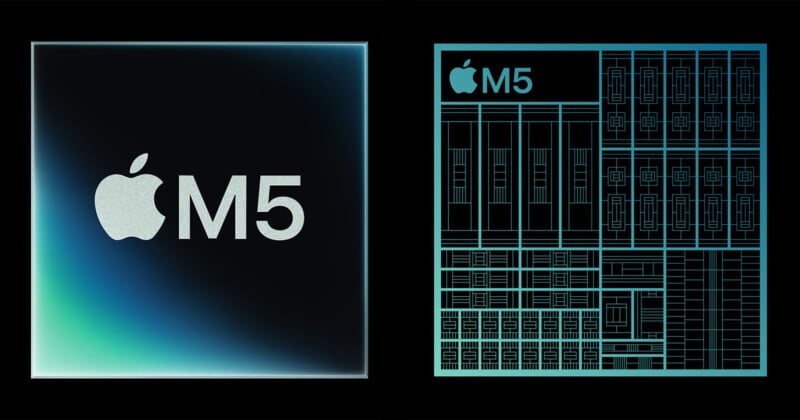
Apple also held a launch, introducing its new M5 chip, which provides a modest CPU improvement but a significant 45% boost to its GPU. This new chip is at the heart of the updated Vision Pro, which also receives a more comfortable “dual net band” and a 120Hz refresh rate. The 14-inch MacBook Pro and iPad Pro were also updated with the M5 chip and faster SSDs.
In Europe, Apple will no longer include a charger in the MacBook Pro box. While this has caused some controversy, the laptop’s price has also been reduced by €100, potentially making it a net positive for consumers who already own a compatible charger.
In other brief news, reliable reports indicate that Samsung is canceling the S26 Edge due to poor sales of its predecessor. The company also teased “Project Muhan,” its upcoming competitor to Apple’s Vision Pro, with an event expected on October 21st. Finally, both Honor and Samsung faced criticism for releasing new advertisements that were obviously AI-generated and widely panned for their poor quality.